
Calcium From Food:
What to Eat for Strong Bones
Your bones (and your blood sugar) need real food, not pills
As I get closer to 60, I have been thinking about my bones just as much as I think about my blood sugar, and the more I’ve learned, the more I’ve realized those two things are really one conversation.
For years, the standard advice for women heading into perimenopause and menopause was simple: take a calcium supplement and call it done. I understand the appeal — it’s an easy box to check. But as a certified holistic nutritionist and integrative health practitioner who’s spent years wearing a CGM and tracking how food actually moves through the body, I’ve come to believe a chalky pill misses the point entirely.
Here’s the thing about calcium from food: you never get it alone. When you eat foods naturally rich in calcium — a bowl of yogurt, a piece of salmon, a handful of almonds — you’re also getting vitamin K2, vitamin D3, and magnesium in that same bite. These co-factors act almost like a delivery crew, guiding calcium into your bones instead of letting it collect somewhere it shouldn’t, like your arteries.
And here’s what I love most: those same nutrients are pulling double duty for your metabolic health. Magnesium and vitamin D both play a role in insulin sensitivity, so the very meal that’s building your bones is also supporting your blood sugar. That’s the real win of eating this way — one delicious meal doing far more for you than a pill ever could.
And we can’t talk about bone health without talking about protein. Preserving lean muscle mass matters just as much for your bones as it does for your metabolism, which is why I keep coming back to whole food sources of calcium — like a good Greek yogurt or cultured cottage cheese — that give you protein and calcium in the same bite.
The menopause connection
Here’s what I find fascinating: our hormones, our metabolism, and our bones are far more connected than most of us realize. As estrogen declines during perimenopause and menopause, we tend to see shifts in both bone density and insulin sensitivity happening together. Researchers are still working out exactly how these two systems influence each other — it’s a more complicated relationship than a simple “good” or “bad” in one direction. But what we do know is this: your bones and your metabolism thrive on the same foundation — stable blood sugar, adequate protein, and real, whole food nutrients.
So when I build a metabolically healthy plate or bowl with plenty of non-starchy vegetables, 25-30 grams of protein, and at least 10 grams of fiber, I’m supporting my blood sugar and my bones with the very same bite.
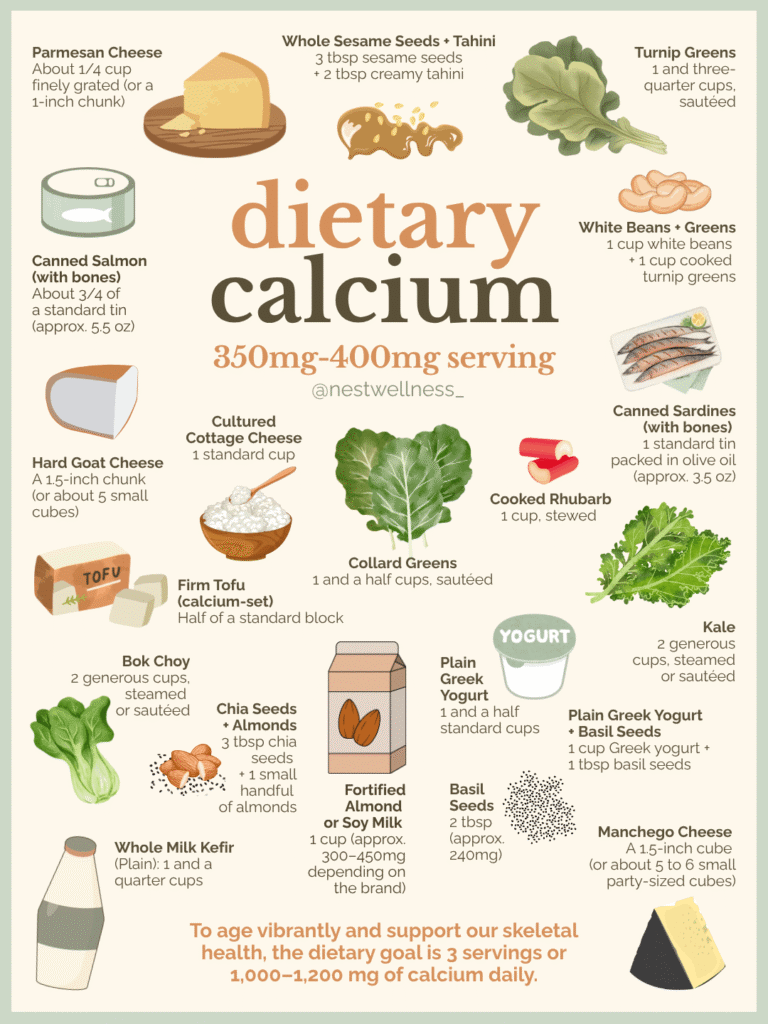
A whole food blueprint for stronger bones
Most women are falling short on calcium every single day and don’t even know it. The target is 1,000–1,200mg of calcium daily or 350-400mg per meal. So how do you actually achieve that without supplements? It’s simpler than you’d think once you know where to look:
Quality dairy:
Cultured cottage cheese or a high-protein Greek yogurt give you a big calcium boost alongside serious protein. Adequate protein (aim for 25-30g per meal) reduces the risk of sarcopenia while helping to support your bones. For recipe ideas, read my Substack post 5 savoury breakfast (or lunch!) bowls with 30g protein, 10g fiber and 500mg calcium.
Hard cheeses:
A hard goat cheese, parmesan, or manchego packs a concentrated calcium punch — even a small amount grated over roasted vegetables or shaved onto a salad goes a long way.
Canned fish with bones:
Sardines or canned salmon (with the bones left in) are some of the most concentrated whole-food calcium sources out there, plus you get a dose of anti-inflammatory omega-3s in the same can. Keep them on hand for easy assembled meals you can put together in minutes.
Leafy greens:
Fill half your plate with sautéed kale, bok choy, collards, spinach, or broccoli — they’re full of whole food fiber, good for your bones and your gut bacteria.
Nuts and seeds:
Almonds and chia seeds are easy additions, and part of why I love my Keto Breakfast Cookies — 15 grams of fiber and 20 grams of protein, largely from the almond butter, almond flour and chia seeds, in a breakfast that happens to taste like dessert.
Whole sesame seeds and tahini:
A spoonful stirred into a dressing or drizzled over roasted vegetables adds calcium without you even noticing it’s there. This Salted Chocolate Tahini Smoothie has 191 grams of calcium, 15 grams of protein and 6 grams of fiber in just one serving.
Tofu and tempeh:
If soy works for your body, calcium-set tofu and tempeh are two of the few plant-based proteins that also deliver a real calcium boost — great swapped into a stir-fry or bowl wherever you’d normally reach for chicken.
Hit your calcium targets every day
If you want a meal plan to help you hit 1,000–1,200 mg of calcium a day for a full week (while still reaching your protein and fiber goals!), I have broken it all down in my Substack post calcium from food: 5 sample days. You’ll also find downloads for calcium boosters to keep on hand, calcium + protein rich snacks, and a daily calcium tracker.
And if you’re curious about the movement and resistance training side of bone health, don’t miss my conversation with bone health specialist Jordan Jones: how to rebuild bone density after menopause (yes, it’s possible).
Protecting your cellular health doesn’t have to be complicated, and it doesn’t require a cabinet full of supplements either. If you want more metabolic health tips, delicious CGM tested low glycemic recipes and frameworks, and access to a community supporting one another in aging vibrantly, I’d love for you to join us on Substack.
Subscribe here!🧡
Nourishing you always,
Beth
